
Last Updated: October 11, 2026
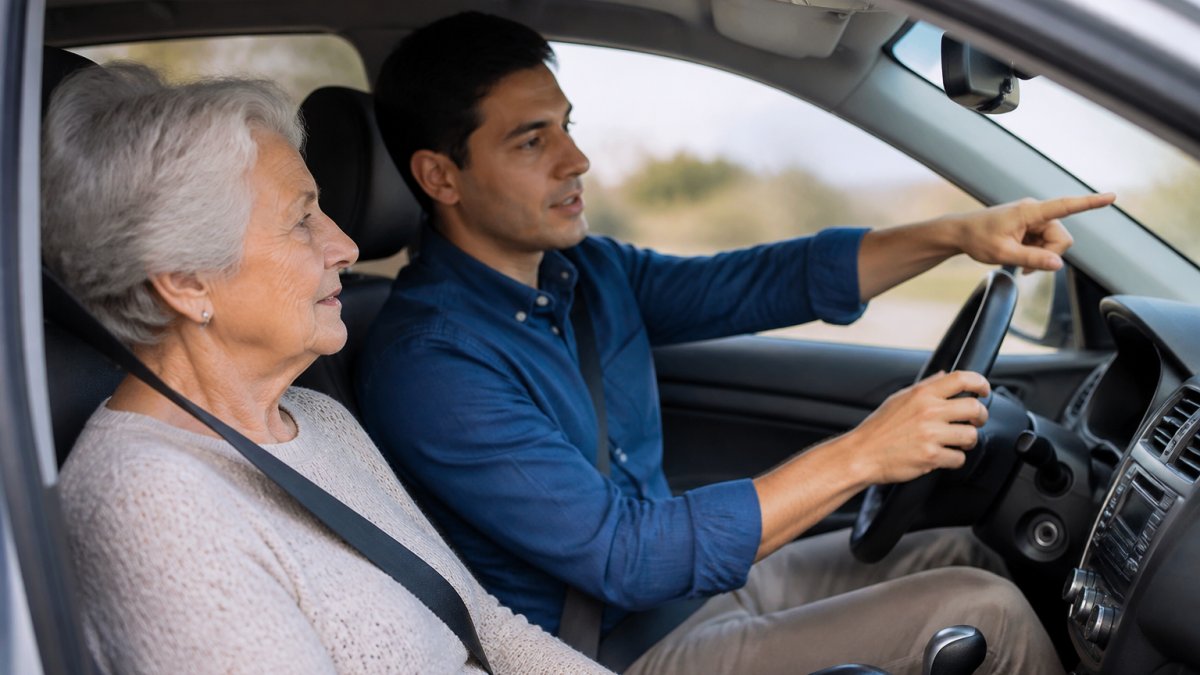
Private driving instruction for seniors addresses a real need when confidence behind the wheel slips. Personalized one-on-one lessons create a safe space to rebuild skills without the pressure of a crowded classroom or group dynamics.
Tailored private instruction delivers feedback for your specific challenges, not a one-size-fits-all curriculum.
Private lessons address the fear of losing independence. Staying confident behind the wheel means maintaining freedom to run errands, visit family, and live on your own terms.
Age brings physical and cognitive changes: slower reaction time, less sharp vision, reduced neck flexibility for blind-spot checks, and hearing changes that make sirens harder to notice.
These shifts mean your driving needs to adapt. A professional instructor assesses changes and helps you compensate, adjusting mirrors, mastering highway merging, or improving low-light driving.
Medications can affect alertness and coordination. A qualified instructor helps you understand how prescriptions influence your driving and suggests practical adjustments.
The first session with Drive Florida Safe Driving School focuses on assessment. Your instructor observes how you handle maneuvers, respond to traffic, and where confidence dips, establishing a baseline for future lessons.
Each lesson builds on the previous one at your pace.
Your instructor teaches defensive driving techniques, explains updated traffic laws, and helps you practice the exact routes that worry you most until they feel manageable.
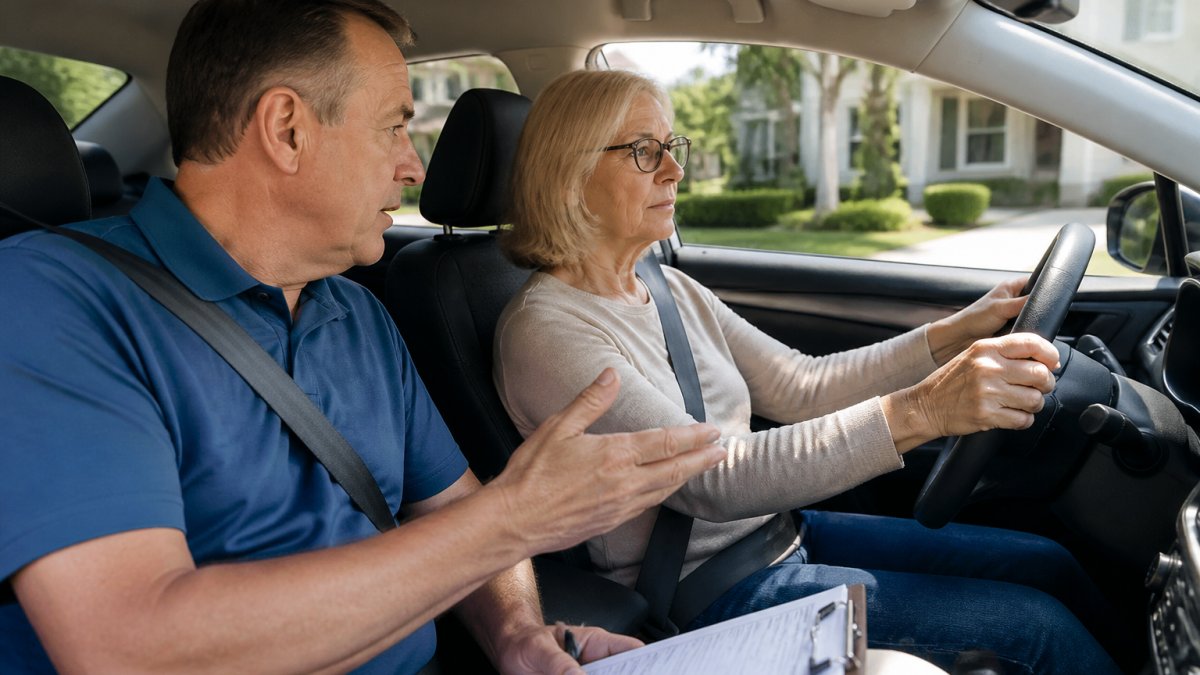
Refresher driving lessons target the gap between “I used to know how to do this” and “I feel ready to do it again.” Rebuilding confidence requires practice in real traffic with real feedback, not just remembering rules.
A professional instructor creates structured progression: early lessons on quiet roads for basic control, advancing to busier streets and highway on-ramps as confidence grows.
Behind-the-wheel training for seniors is hands-on and focused on your needs. Your instructor guides you through maneuvers, explains what you’re doing right, and corrects problems immediately so they don’t become habits.
A typical lesson includes pre-drive discussion, driving time on roads you choose, and post-drive feedback. Many instructors use educational videos between lessons; this combination of in-car practice and visual learning is more effective than either alone.
You control the difficulty. Your instructor structures lessons to build skills safely, whether you need more time on residential streets or are ready for highway driving.
Finding an instructor with senior expertise and verifiable credentials is essential. Private instruction quality depends on the individual instructor, so selection matters.
Verify Licensing and Credentials
Confirm your instructor holds a valid driver’s license with no active suspensions. Ask for proof and verify independently through your state’s DMV website.
Ask about defensive driving certification from the National Safety Council or similar organizations.
Assess Experience with Older Adults
Teaching teenagers to pass their first test differs from helping seniors rebuild confidence after years away. Ask: What challenges do they face?
Seek instructors who understand senior concerns, slower reaction times, vision changes, medication effects, hearing loss, mobility limitations, and explain how they adapt teaching to address them.
Evaluate Communication Style and Patience
Request a phone conversation or meeting before committing. A good instructor listens more than lectures, asks what worries you, explains adjustments clearly without condescension, and is honest about unsafe habits while respecting your autonomy.
Notice how they respond to questions. Do they answer directly? Welcome clarification? Patience is essential; irritation during a calm call signals impatience during stressful lessons.
Check Availability, Service Area, and Lesson Structure
Confirm the instructor operates in your area and offers times that work for you. Ask about cancellation policy, rescheduling flexibility, and makeup lessons.
Understand their lesson format: vehicle provided or yours, lesson length, package discounts, route flexibility, and whether they meet at home or a central location.
Create a Simple Comparison Checklist
List your priorities: specific routes, lesson length, pickup service, accessibility needs. Use the same checklist for each instructor to compare licensing, senior experience, communication, availability, and cost. The cheapest option isn’t always best.
Red Flags to Avoid
Avoid instructors who won’t provide proof of licensing, lack senior references, dismiss your concerns, or pressure large upfront commitments. Skip those who guarantee outcomes or focus on test prep rather than real-world skills.
Defensive driving means anticipating problems before they happen and positioning yourself to avoid them. This matters at every age, but it becomes even more important as reaction time naturally slows.
Key defensive techniques for seniors include scanning the road 10-15 seconds ahead instead of just watching the car in front of you, maintaining larger following distances so you have more time to brake, and positioning your vehicle to avoid blind spots. You’ll learn to use mirrors effectively, check blind spots thoroughly before lane changes, and recognize hazardous situations early enough to avoid them.
Defensive driving also means knowing your limits and respecting them. If night driving exhausts you, don’t do it. If highways stress you out, stick to surface streets. Adapting your driving to match your current abilities isn’t giving up, it’s driving smart.
Before you schedule your first lesson, take time to prepare so the experience is as comfortable and productive as possible.
Assess Your Specific Needs and Goals
Write down the driving situations that worry you most. Are you concerned about highway merging, night driving, parking in tight spaces, navigating unfamiliar roads, or new traffic laws you’ve missed? Be specific: “I haven’t driven in eight years” is different from “I drive daily but feel anxious on the interstate.” This clarity helps an instructor design lessons that address your real concerns, not generic ones.
Also consider any physical or mobility factors that might affect your driving. Do you have arthritis that makes turning the steering wheel difficult? Hearing loss that makes it hard to notice sirens? Vision changes that affect night driving? Mobility limitations that make entering or exiting a vehicle challenging? These aren’t reasons to avoid driving; they’re reasons to discuss adaptations with your instructor upfront.
Discuss Accessibility and Vehicle Adaptations
If you have mobility, hearing, or vision concerns, ask your instructor whether they can accommodate you in their vehicle or whether you should use your own car (which may already have adaptations you’re familiar with).
If you use a mobility device (cane, walker, wheelchair), confirm the instructor’s vehicle can accommodate it or that you’ll practice in your own vehicle where you’re already set up.
Involve Family Thoughtfully
If a family member suggested lessons or expressed concern about your driving, have an honest conversation with them about what you want to accomplish. Frame private instruction as a way to stay independent and safe, not as a response to pressure. You might say: “I want to refresh my skills so I can keep driving confidently for as long as possible,” rather than accepting it as a verdict that you’re no longer safe.
Decide whether a family member should attend the first lesson. Some seniors find it helpful to have a trusted person present during the initial assessment so they understand what the instructor observes and what the plan is. Others prefer privacy and will report back afterward. Neither choice is wrong; pick what feels right for you. If family members do attend, ask them to observe quietly and let the instructor lead; their presence should support, not overshadow, your learning.
Gather Required Documents and Information
Bring your valid driver’s license and proof of insurance to your first lesson. If you’re working with an instructor from a formal driving school, they may ask for emergency contact information and a brief health history (especially if you take medications that affect alertness). Have your vehicle’s registration and keys ready if you’re using your own car.
Schedule Strategically
Book your first lesson during lighter traffic times, early morning, mid-afternoon, or early evening on a weekday. This reduces stress while you’re rebuilding confidence and lets you focus on technique rather than managing heavy traffic. Avoid rush hours and weekend peak times for your first few sessions.
Prepare Mentally
Remember that the first lesson is an assessment, not a test. Your instructor will observe how you handle basic maneuvers, how you respond to traffic, and where your confidence dips. This baseline tells them exactly what to focus on in future sessions. You’re not expected to be perfect; you’re expected to be honest about what challenges you.
Take the First Step
Reach out to an instructor you’ve vetted using the criteria in the previous section. Describe your situation briefly: “I haven’t driven in five years and want to rebuild my confidence,” or “I drive regularly but feel anxious on highways.” Ask about their availability, lesson structure, and whether they can accommodate any specific needs you’ve identified. Request a trial lesson if possible so you can assess fit before committing to a full package.
Each lesson builds on the previous one, and you set the pace. There’s no standard timeline; your readiness is what matters.
Choose an instructor with experience working specifically with older adults and proven expertise in defensive driving techniques. Look for someone who is patient, accredited, and can tailor lessons to your specific concerns, whether that’s highway anxiety, low-vision accommodation, or refreshing skills after years away from driving. Ask about their teaching style and request references from other senior students. A good instructor will assess your abilities honestly and create a personalized plan rather than using a one-size-fits-all approach.
Private instruction builds confidence through one-on-one attention and customized pacing. Your instructor can focus on the specific situations that make you anxious, whether that’s merging on busy highways, navigating local roads, or handling traffic in unfamiliar areas. Practicing these scenarios repeatedly in a supportive environment, with immediate feedback and guidance, helps you develop muscle memory and decision-making skills. Many seniors report feeling capable and independent again after completing personalized lessons that address their exact concerns.
The number varies based on your current abilities, how long you’ve been away from driving, and your specific goals. Your instructor will assess you during an initial evaluation and recommend a lesson package tailored to your needs. Progress is individual, some seniors gain confidence quickly, while others benefit from extended, gradual practice.
Yes. Refresher driving lessons for seniors are designed exactly for this purpose. Whether you need to relearn highway merging, practice defensive techniques for hazard awareness, or get comfortable with Florida-specific traffic laws and local road conditions, your instructor can focus on those areas. You don’t need to start from scratch, personalized lessons target the gaps in your skills and build on what you already know, making the process efficient and confidence-building.
En Drive Florida Safe Driving School, estamos dedicados a ayudar a nuestros estudiantes novatos a convertirse en los conductores más seguros. Siempre nos esforzamos para que usted o su ser querido reciban las técnicas, los conocimientos y las normas de manejo defensivo más actualizados.



 Spanish
 English

