
Handing your teen the car keys for the first time is a big moment. Excitement mixes with worry, and most parents end up asking the same question: who should teach my child to drive? In a growing community like ours, new roads, busy school zones, and fast highway ramps sit only minutes from home. One wrong choice of a driving school in North River Ranch can leave a teen with gaps in skill and confidence.
This guide helps you pick the Right Driving School for your family. You will learn what to look for, which questions to ask, and which warning signs to avoid. By the end, you will know exactly how to judge each option and make a choice you feel good about.
North River Ranch keeps growing, and so does its traffic. New homes bring more families, more school buses, and more construction vehicles on the same streets. Teen drivers share these roads with cyclists, walkers, and trucks heading toward the highway. A teen who only practices on empty streets often struggles when real traffic shows up, so a driving school in North River Ranch must prepare students for this busy mix.
Florida also uses a graduated licensing system. Teens complete a traffic and substance abuse course, pass a knowledge exam, and then drive on a learner’s permit. Before a teen under 18 can earn a license, a parent must certify at least 50 hours of supervised driving, including 10 hours at night. Parents handle much of that practice, but professional lessons build the correct habits first, so practice time reinforces good skills instead of bad ones.
Every driving school says it teaches safe driving. The real differences show up in who teaches, how they teach, and what your teen practices. Use the points below to compare your options side by side.
The instructor matters more than anything else. A certified driving instructor North River Ranch parents can rely on should hold proper state licensing, pass background checks, and know how to calm a nervous beginner. Ask how instructors handle a teen who freezes at a busy intersection. A good answer focuses on patience, clear instructions, and building confidence one small step at a time.
Strong beginner driver training North River Ranch teens need follows a logical order. Lessons should start with basic car control in a quiet area, then move to neighborhood streets, school zones, main roads, and finally highway merging. Ask the school to walk you through its plan. If the answer sounds vague, your teen may spend lessons repeating easy skills while missing harder ones.
Training cars should feel safe and look professional. Look for dual-control brakes, working mirrors, clean interiors, and clear student driver signs. Dual controls let the instructor stop the car if a beginner makes a mistake. That safety net helps teens relax, and a relaxed student learns faster than a tense one.
Your teen will not drive on a test course every day. The best lessons cover the roads your family actually uses, such as school drop-off routes, roundabouts, shopping center parking lots, and busy highway on-ramps. Practicing these real routes with a professional removes the fear of the unknown and prepares teens for daily life behind the wheel.
You deserve to know how your teen is doing. A good school shares clear feedback after lessons, including strengths, weak spots, and what to practice at home. This feedback turns your supervised drives into focused practice instead of random trips around the block.
Before you book, use this checklist during your first call. It keeps the conversation focused and helps you compare schools fairly.
| Question to Ask | Why It Matters | A Good Answer Sounds Like |
|---|---|---|
| Are your instructors licensed and background-checked? | Protects your teen and confirms training quality | “Yes, every instructor is licensed and screened.” |
| What does the first lesson cover? | Shows whether the school starts at the right level | “Basic car control in a quiet, safe area.” |
| Do your cars have dual-control brakes? | Adds a safety net for beginners | “Yes, every training car has them.” |
| Will lessons include highways and busy roads? | Prepares teens for real traffic | “Yes, once the student is ready.” |
| How do you share progress with parents? | Helps you guide home practice | “We review skills and next steps after lessons.” |
| How do you help nervous students? | Reveals teaching style and patience | “We go at the student’s pace and build step by step.” |
Picture a common situation. A parent has a 15-year-old who just earned a learner’s permit. The teen does fine in empty parking lots but panics when cars pass on a busy road. After a few professional lessons focused on lane position and mirror checks, the teen learns to stay calm. The parent then practices the same skills during weekend drives. Within weeks, the teen handles busy roads with steady hands.
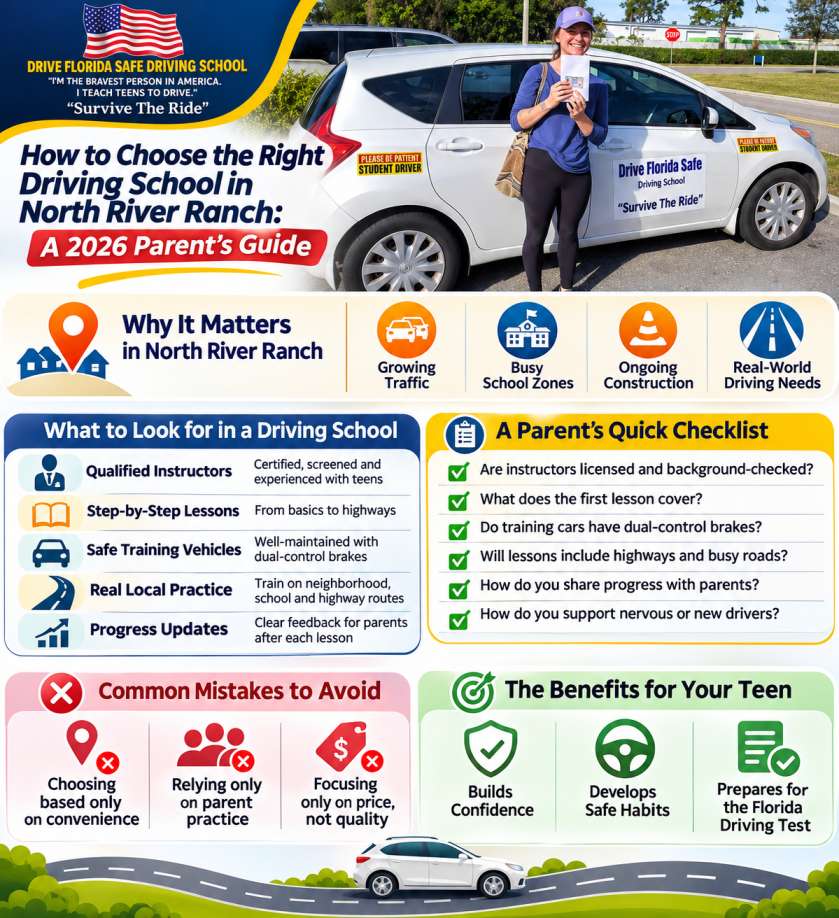
Even careful parents make these mistakes. Knowing them early saves time, stress, and wasted lessons.
At Drive Florida Safe Driving School, we often share these tips with parents who want their supervised drives to count.
The Right Driving School gives your teen more than a license. It builds safe habits, calm confidence, and smart decision-making that last a lifetime. Focus on qualified instructors, a clear lesson plan, safe vehicles, real-road practice, and honest feedback. When a school checks all these boxes, you can trust your choice and enjoy watching your teen grow into a safe driver.
At Drive Florida Safe Driving School, we design our programs around patient teaching and steady progress. If you are ready to start your teen’s journey, reach out to Drive Florida Safe Driving School to talk about their goals, and we will help you plan the next step with confidence.
Most teens start once they hold a learner’s permit. Florida allows teens to apply for a permit at age 15 after they complete the traffic and substance abuse course and pass the knowledge exam. Starting lessons early in the permit stage works best. Your teen learns correct habits from day one, and every supervised drive with you then builds on a strong foundation.
There is no single number, because every teen learns at a different pace. A confident teen may move quickly, while a nervous beginner needs more time on basic skills. Focus on milestones instead of counting lessons. Your teen should handle steering, braking, lane changes, intersections, and highway merging smoothly. A certified driving instructor North River Ranch parents trust will tell you honestly which skills still need work.
Yes, and this mix gives the best results. Professional lessons teach correct technique, while your supervised drives give your teen the repetition they need. Ask the instructor what to practice after each lesson, then focus your drives on those skills. This teamwork helps teens improve faster. Your own drives with your teen also count toward the supervised hours Florida requires before a teen license.
The first lesson focuses on comfort and control. The instructor usually explains the car’s controls, mirror setup, and seat position before your teen moves at all. Then your teen practices smooth starts, stops, and turns in a quiet area. The goal is not speed or distance. The goal is to help your teen feel safe, calm, and ready for the next step.
Look for consistent, calm driving rather than one good day. Your teen should check mirrors without reminders, stop fully at stop signs, keep a safe following distance, and handle unexpected moments without panic. Ask your instructor for an honest readiness check before booking. If the instructor spots weak areas, a few focused lessons can turn a nervous test day into a confident pass.
En Drive Florida Safe Driving School, estamos dedicados a ayudar a nuestros estudiantes novatos a convertirse en los conductores más seguros. Siempre nos esforzamos para que usted o su ser querido reciban las técnicas, los conocimientos y las normas de manejo defensivo más actualizados.



 Spanish
 English

