

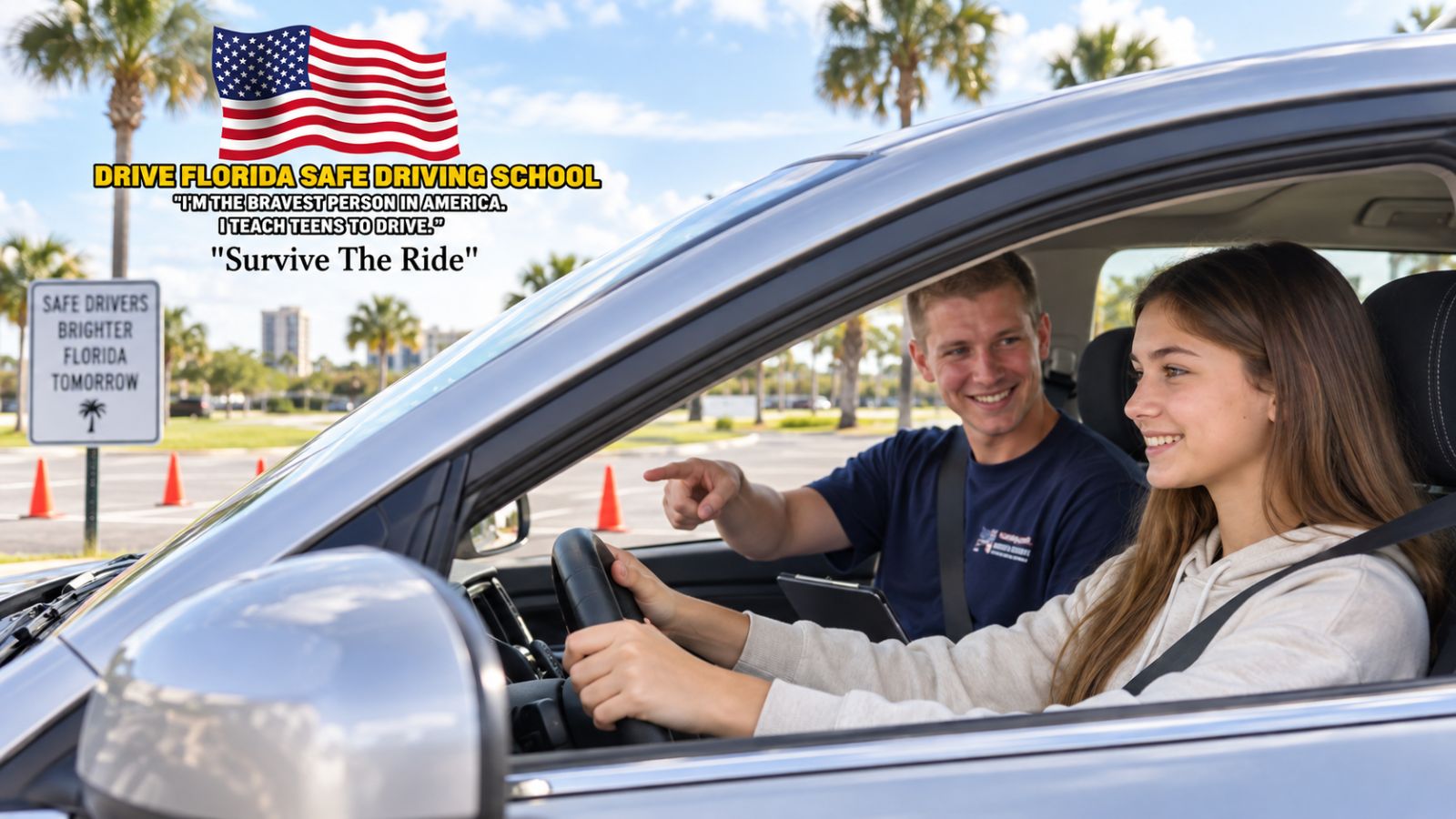
Learning to drive is an important milestone in a teen’s life. It provides new freedom but also new responsibilities. With Florida’s variety of driving conditions, teens should be prepared to navigate through neighborhoods, school zones, busy intersections, highways, and more. They should know how to navigate safely and responsibly.
The best way to ensure this is to begin driver training programs with parents, guardians, or qualified instructors to instill responsible driving skills from the beginning. Joining a Florida driving school is necessary for new drivers.
New drivers in Florida can take a 4 hour basic driver improvement course online where they can acquire basic knowledge of driving. Parents can then engage their teens and help them apply what they learned in the class once they finish the course. Pasing the florida drivers’ licence test is also necessary. For this, you can seek guidance from Drive Florida Safe Driving School.
Parents should teach children the fundamental driving rules before letting them drive on the roads. They need to know about road rules, including traffic signs, signals, speed limits, and lane rules.
Teens should learn what different signs and symbols mean, including signs giving directions and warnings about dangerous areas. They should also learn how to obey traffic signals.
In addition, they should know and respect speed limits. Roads have different speed limits, so they should always watch for signs advising of the legal speed limit in a given area.
New drivers need time to understand how a vehicle responds. Start in a quiet area with limited traffic. This gives the teen space to practise basic skills.
Early practice can include:
Do not introduce heavy traffic too quickly.
First, help the teen become comfortable with basic control. Then move to busier roads when their skills improve.
This gradual approach can make practice less stressful.
Safe driving requires more than looking straight ahead.
A teen should learn to scan the road and check the surrounding area.
Look several vehicles ahead when possible. This can give the driver more time to react if traffic suddenly slows.
Mirrors help the driver understand what is happening around the car.
Teach the teen to check mirrors regularly without taking their attention away from the road.
Parents can ask simple questions such as, “What do you see ahead?” This encourages active observation.
Seat belts should be used on every trip.
This includes short journeys.
Create a simple routine:
Enter the car → buckle up → adjust mirrors → check surroundings → start driving.
This takes very little time.
Parents should also wear their seat belts every time.
Teen drivers can learn from the habits they see at home.
Phones can take attention away from driving.
Texting is especially distracting because it takes visual, physical, and mental attention.
Set the phone aside before the car moves.
A suitable driving mode can also help reduce notifications.
If a teen needs to make a call or send a message, they should stop somewhere safe first.
Do not encourage “quick checks” while driving.
Full attention should remain on the road.
Florida uses a graduated licensing system for young drivers.
For a teenage learner, he must have a licensed person aged 21 years or more riding with him in the front seat. In Florida, there are restrictions on the hours of the day that a learner may drive.
Rules can change as a teen moves through the licensing process.
Parents and teens should check the current FLHSMV requirements before each stage.
Keeping a simple driving log can also help track practice time and conditions.
Driving practice should not happen only on quiet roads during the day. Once the teen has basic control, gradually introduce different conditions.
Practice can include:
Do not introduce every difficult condition at once.
Intersections can become complicated quickly.
A teen should slow down when needed and check for traffic before moving through.
Do not assume another driver will follow the rules.
Watch for vehicles turning across the road.
Pedestrians and cyclists may be present near intersections.
Even with a green light, the driver should remain alert and check that the path is clear.
Defensive driving in Florida emphasizes being aware and managing risks. A teenager needs to be prepared for any errors that others might make on the road.
Other drivers might suddenly change lanes without giving sufficient warnings. The teen should keep enough space to react.
Defensive driving does not mean driving slowly everywhere. It means making sensible choices based on traffic, road conditions, weather, and other vehicles.
Highway driving can feel very different from local roads. Vehicles move faster. Lane changes can happen more often. Entry and exit ramps also require planning.
Before highway practice, a teen should understand:
Choose a suitable time with manageable traffic for the first highway practice.
Avoid heavy traffic during the first few sessions.
A trained instructor can also help teach highway skills.
School areas can have children, buses, cyclists, crossing guards, and stopped vehicles.
Traffic can change quickly.
A teen should follow school-zone signs and road markings.
They should also slow down when required.
Rushing can lead to danger. Keeping some time in hand can help you.
Parking is an important part of driver training.
A teen can gradually practise:
The use of parking cameras and sensor technology will come in handy.
The driver needs to be aware of his surroundings even if parking cameras are installed.
Rain can lead to loss of grip and visibility. Wet roads can reduce grip and visibility.
It is important for a teenager to realize that the road conditions may need more space and slower speed. Avoid making abrupt maneuvers.
In case the weather gets worse, stop the car in a safe place. A driver shouldn’t continue driving just because he or she is in the middle of a journey.
Drowsiness may affect one’s alertness and responses. Fatigue can lead to lack of concentration.
A teen should not drive if they struggle to stay focused. They may need another way to travel.
Parents can create a simple plan for tired or unsafe situations. The teen should know who they can call for a safe ride.
A teen should understand that alcohol and driving do not mix.
Florida has specific rules for young drivers.
The safest approach is simple.
Never drive after drinking alcohol or using a substance that can affect driving ability.
Parents can create a clear plan.
If a teen feels unsafe getting into a vehicle, they should be able to call a parent or trusted adult for help.
Parents provide valuable practice.
Professional instruction can add structured training and feedback.
Professional driver training may cover:
Professional lessons do not need to replace parent supervision.
Both can support a teen’s learning.
The Florida drivers’ license test checks important knowledge and driving skills. Do not wait until the final week to prepare.
Review the Florida Driver License Handbook. Practise required driving skills throughout the learning period. Parents can focus on one skill during each practice session.
Extra education from Florida driving schools can help young drivers understand road risks.
A 4 hour basic driver improvement course online may help in certain situations. However, teens and parents should confirm that the course meets their specific Florida requirement before enrolling.
Reading about safe driving is useful. Practical driving experience is also important. The two can work together.
Teen driving should start with safety. Learn the rules first. Practise basic vehicle control. Then move slowly into more complex traffic situations. A Florida driving school can provide structured lessons and useful feedback. Parents can support these lessons with regular supervised practice. Focus on simple habits.
Wear a seat belt. Put the phone away. Check mirrors. Watch blind spots. Keep a safe following distance. Follow speed limits. Stay calm. Professional driver training can provide extra support when needed. A 4 hour basic driver improvement course online can be beneficial for you.
Florida’s licensing rules also change as teens move through the graduated licensing system. Check current FLHSMV information before each stage. Good driving is not only about passing a test. It is about making safe decisions every time the vehicle moves. If you need help regarding Florida drivers’ license test passing, you can get in touch with Drive Florida Safe Driving School.
Florida allows teens to begin the licensing process from age 15, subject to current state requirements. Check the latest FLHSMV rules before starting.
Florida has requirements for supervised driving experience. Teens should also practise regularly in different roads and traffic conditions.
Yes. Parents can provide supervised practice when they meet Florida’s requirements. Professional lessons can provide additional instruction and feedback.
Defensive driving can help teens understand road risks and respond to unexpected situations. It can complement normal driver education and supervised practice.
Teens should avoid phone use while driving. Put the phone away before the vehicle moves. Stop somewhere safe before making a call or sending a message.
At Drive Florida Safe Driving School, we are dedicated to assisting our novice learners to become the safest driver. We always strive to render that you or your loved one receives the most updated techniques, knowledge, and defensive driving norms.



 English
  Spanish
