
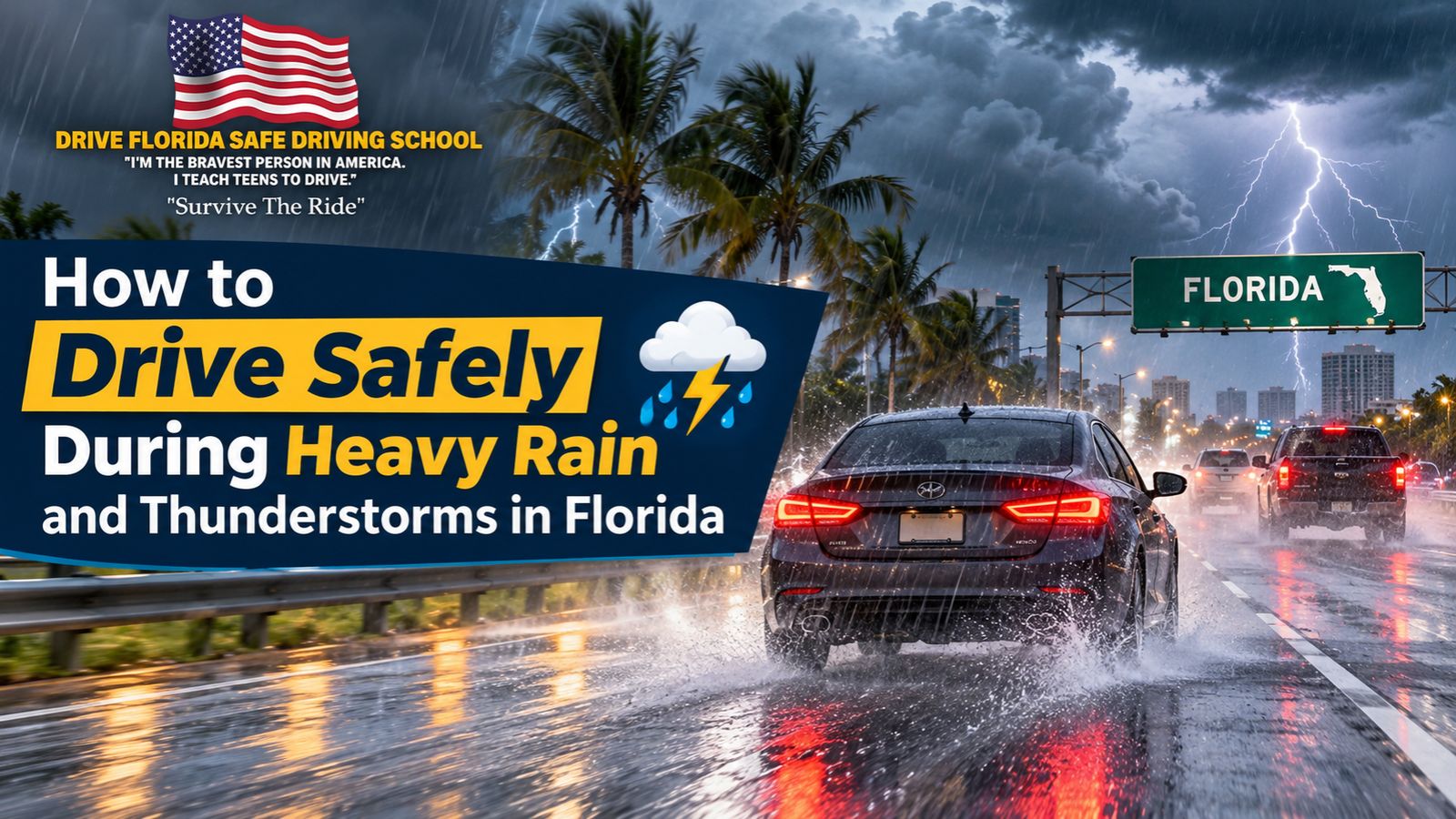
Driving in Florida can be challenging when heavy rain and thunderstorms suddenly change road conditions. A clear afternoon can quickly turn into a downpour, reducing visibility, making roads slippery and increasing the risk of hydroplaning. For new drivers and experienced motorists alike, knowing how to respond to changing weather is an important part of responsible driving. Learning to Drive Safely During Heavy Rain involves more than slowing down. It requires preparation, awareness, proper vehicle control and the ability to make safe decisions when conditions become difficult.
For anyone preparing for a Florida drivers license test or developing everyday driving skills, understanding wet-weather safety is an essential part of becoming a confident and responsible motorist.
Florida experiences frequent thunderstorms, particularly during warmer months. Sudden showers can affect roads, highways, residential streets and busy intersections. Unlike light rain, heavy downpours can make it difficult to judge distances, recognise road markings and identify hazards ahead.
One major concern is reduced tyre grip. When water collects between the tyres and road surface, the vehicle may lose some of its traction. This makes steering and braking less predictable. Water spray from nearby cars can also temporarily block the driver’s view, especially when travelling behind larger vehicles.
Another concern is standing water. Areas with poor drainage, low-lying roads and underpasses can collect rainwater quickly. A route that was safe earlier may become hazardous after a short period of intense rainfall.
Drivers should therefore understand that the posted speed limit does not always represent a safe speed for current conditions. A responsible driver adjusts their speed according to visibility, road surface, traffic and weather.
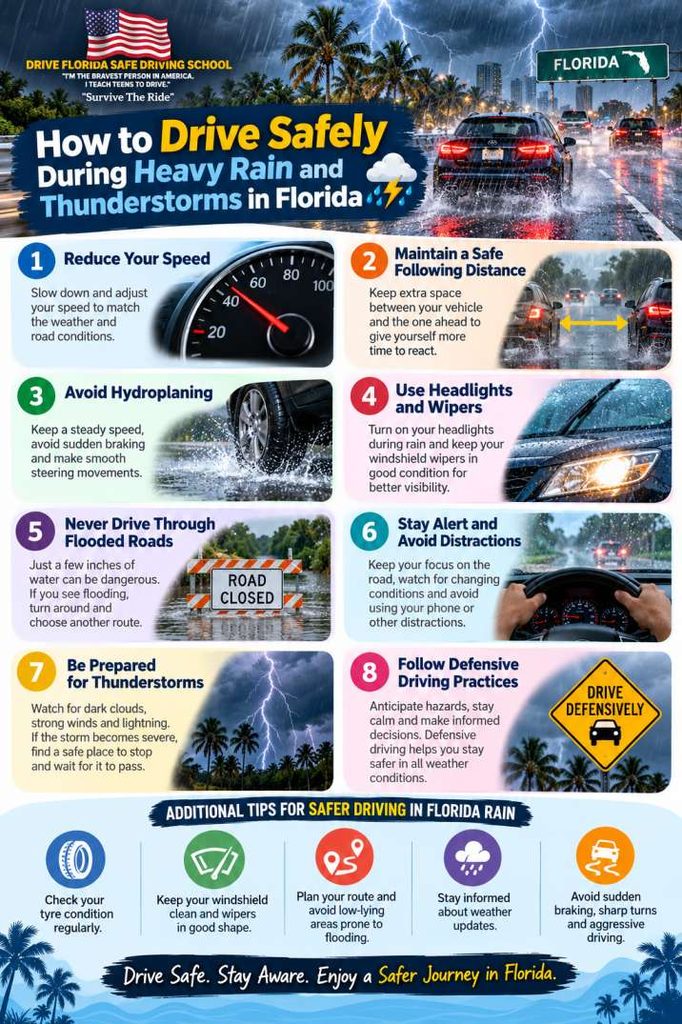
Reducing speed is one of the most important ways to improve safety on wet roads. When rain reduces tyre traction, travelling too quickly can make it harder to stop, turn or respond to unexpected obstacles.
Many drivers make the mistake of maintaining their usual speed because other vehicles around them are moving quickly. However, following the behaviour of surrounding traffic does not guarantee that the conditions are safe.
Wet road surfaces can increase stopping distances. If a vehicle ahead suddenly brakes, a driver travelling too fast may not have enough time or distance to respond safely.
Consider a common situation: you are travelling along a busy Florida road when a sudden shower begins. The vehicle ahead slows down, but another driver behind you continues at their usual speed. If you need to brake suddenly, the reduced grip and shorter following distance can increase the risk of a collision.
To reduce this risk:
The correct speed depends on the conditions. There is no single speed that is safe for every rainy-weather situation.
Hydroplaning is one of the most serious risks associated with driving during heavy rainfall. It happens when a layer of water builds between the tyres and road surface, reducing or temporarily eliminating direct tyre contact with the pavement.
When hydroplaning occurs, the driver may experience reduced steering response and difficulty controlling the vehicle. The car may feel as though it is floating or sliding rather than travelling normally.
Several factors can increase the risk:
Tyre condition is particularly important because tread patterns help channel water away from the contact area.
If you suspect hydroplaning, remain calm. Panic reactions can make the situation worse.
Follow these general safety principles:
Do not attempt to force the vehicle back into position with aggressive movements. Smooth and controlled responses are generally safer.
Drivers should also avoid using cruise control on wet roads because they need to respond quickly to changing traction and speed conditions.
Visibility is a major concern during Florida thunderstorms. Heavy rain can make it difficult to see vehicles, pedestrians, cyclists, road signs and lane markings.
Windshield wipers and headlights play an important role in maintaining visibility and helping other motorists recognise your vehicle.
Florida law requires headlights to be switched on when windshield wipers are in use because of rain, as explained in Florida Highway Safety and Motor Vehicles’ wet-weather guidance.
Before driving, make sure:
Use low-beam headlights during heavy rain. High beams can reflect off rain and water droplets, making visibility worse in certain conditions.
Heavy rain and humidity can cause windows to fog from the inside. This can reduce visibility even when the wipers are working properly.
Use the vehicle’s defrost setting or air conditioning to help clear the glass. Avoid wiping the windshield while driving, as taking your attention away from the road can create another hazard.
Following too closely is dangerous in normal conditions, but it becomes even riskier during heavy rain.
Wet pavement can affect braking performance, while water spray from vehicles ahead may make it harder to recognise brake lights and other road hazards.
Maintaining additional space gives drivers more time to identify problems and respond without sudden movements.
For example, if a vehicle suddenly slows near a traffic signal, a driver with sufficient following distance has more time to reduce speed gradually. Someone following closely may need to brake sharply, increasing the chance of losing traction.
The purpose of extra distance is to create a safety margin, not simply to maintain a fixed number of car lengths.
Flooding can develop quickly during intense Florida rainfall. Water may collect on streets, cover drainage areas and conceal damaged road surfaces.
One of the most dangerous mistakes motorists make is assuming that shallow-looking water is safe to cross.
The actual depth may be difficult to judge, and moving water can exert considerable force on a vehicle. Floodwater may also hide debris, damaged pavement, open drains and electrical hazards.
If a road is flooded, choose another route. Never attempt to drive through water simply because another vehicle has crossed it.
Remember these precautions:
According to national road safety guidance, approximately 12 inches of rushing water can carry away most cars, while around two feet can carry away many larger vehicles. These figures are not safe crossing limits; much less water can create serious hazards depending on the vehicle and current.
The safest decision is to avoid flooded roads altogether.
Defensive driving means anticipating potential hazards rather than reacting only after something goes wrong.
During thunderstorms, this approach becomes particularly important because weather conditions can change quickly.
A defensive driver pays attention to road conditions, nearby vehicles, pedestrians, cyclists and possible escape routes.
Some useful habits include:
Scan the road ahead: Look beyond the vehicle immediately in front of you. This helps identify traffic queues, standing water and sudden changes in road conditions.
Check mirrors regularly: Monitor vehicles approaching from behind, especially when traffic slows during heavy rain.
Avoid unnecessary lane changes: Changing lanes on wet pavement requires careful judgement. Avoid sudden movements and pass only when visibility, space and road conditions make it safe.
Watch for pedestrians and cyclists: Rain can make vulnerable road users harder to see. Be particularly careful near crossings, schools and residential streets.
Stay calm: Avoid aggressive reactions when other motorists behave unpredictably.
Defensive driving is not about controlling other drivers. It is about managing your own decisions and maintaining enough space and awareness to respond safely.
Learning to drive involves more than understanding traffic signs and operating a vehicle. Drivers also need to recognise changing road conditions and make sensible decisions.
Professional driving instructors can help learners develop these skills through structured explanations, supervised practice and feedback.
For example, a learner preparing for a Florida drivers license test may understand the importance of stopping at a traffic signal but still need guidance on adjusting braking distance when approaching that signal on wet pavement.
A structured driver education programme can help learners understand:
Learners should not practise in severe thunderstorms simply to gain experience. Wet-weather instruction should only take place when conditions are appropriate, the vehicle is suitable and the instructor considers the activity safe.
Good driver training helps students develop habits that remain useful long after they receive their driving privileges.
During ordinary lessons, instructors can explain how steering, acceleration, braking and observation work together. These fundamentals become especially important when road surfaces are wet.
Drivers should learn to make gradual movements rather than sudden corrections.
For example, when approaching a wet intersection, a learner should recognise the need to reduce speed early rather than wait until reaching the stop line. This provides more time for controlled braking.
Other useful training areas include:
Smooth braking: Apply the brakes progressively and allow enough distance to stop without unnecessary harsh movements.
Controlled steering: Avoid sharp turns, particularly when travelling over standing water or slippery road markings.
Observation skills: Look for changes in traffic flow, road conditions and visibility.
Hazard recognition: Identify puddles, debris, damaged roads and areas where water may collect.
Decision-making: Understand when it is safer to wait rather than continue driving.
These skills contribute to responsible driving in different weather conditions.
Sometimes the safest driving decision is to stop the journey.
Heavy rain, poor visibility, strong winds, lightning and flooding can combine to create conditions that are difficult to manage even for experienced drivers.
Drivers should avoid continuing when they cannot see the road clearly enough to travel safely or when weather conditions make vehicle control uncertain.
If conditions deteriorate:
If you are caught in a thunderstorm and cannot reach a building safely, an enclosed metal vehicle with its windows closed provides protection from lightning. Avoid touching metal surfaces or electrical connections inside the vehicle during the storm.
A convertible vehicle does not offer the same lightning protection as an enclosed hard-topped vehicle.
Never leave a vehicle to stand under an isolated tree during a thunderstorm.
Even careful motorists can develop habits that become dangerous when weather conditions change. Recognising these mistakes can help drivers make better decisions.
The posted speed limit is not a guarantee that the same speed is appropriate in heavy rain. Reduce speed according to visibility, traffic and road conditions.
Cruise control can reduce the driver’s immediate control over acceleration. Avoid using it on wet or slippery roads.
Hard braking can contribute to loss of control, particularly when tyres have reduced grip. Anticipate traffic changes and slow down gradually whenever possible.
Trucks and buses can create significant water spray, making it difficult to see the road ahead. Leave additional space.
A puddle may conceal a pothole or deeper water. Avoid standing water whenever possible, particularly when its depth cannot be judged.
If rain becomes so heavy that you cannot see safely, do not continue simply because you are close to your destination. Find a safe place to wait.
A driver safety course can help motorists understand the relationship between road conditions, vehicle control and responsible decision-making.
The aim is not simply to memorise driving rules. It is to understand why certain actions are safer and how to apply them in everyday situations.
Topics such as hazard perception, safe following distances, defensive driving and adverse weather awareness can help drivers become more prepared.
For new drivers, this knowledge supports the skills developed during regular driving lessons. For experienced motorists, reviewing safe-driving principles can help identify habits that may need improvement.
A driver who understands the risks of wet pavement is more likely to recognise when slowing down, changing routes or postponing a journey is the sensible choice.
The Florida drivers license test assesses knowledge and driving abilities needed for responsible road use. However, preparing for a driving examination should not be limited to memorising answers.
Learners should also understand how traffic laws and safe-driving principles apply to everyday conditions, including heavy rain and thunderstorms.
Important subjects to understand include:
Understanding these principles helps learners prepare for the responsibilities of driving beyond the examination itself.
At Drive Florida Safe Driving School, the emphasis is on developing responsible driving habits through knowledge, preparation and practical understanding. Becoming a capable driver means knowing not only how to operate a vehicle but also when conditions require additional caution.
Before heading out during rainy weather, consider these practical reminders:
These habits are simple, but applying them consistently can make a meaningful difference to road safety.
Driving during heavy rain and thunderstorms requires patience, preparation and responsible decision-making. From understanding hydroplaning to recognising flood hazards, every motorist should know how weather changes the way a vehicle responds on the road.
Learning to Drive Safely During Heavy Rain is an important part of developing long-term driving confidence. Whether you are preparing for a Florida drivers license test or improving your everyday driving habits, practising defensive driving principles can help you make better decisions in challenging conditions.
At Drive Florida Safe Driving School, we believe responsible driving begins with proper knowledge, awareness and consistent learning. Developing these habits through quality driver education can help learners become more confident, considerate and safety-conscious motorists.
The safest approach is to reduce speed, switch on headlights, use windshield wipers and maintain additional following distance. Avoid sudden braking, sharp steering and unnecessary lane changes. Watch for standing water and never drive through flooded roads. If visibility becomes too poor to continue safely, find a suitable stopping place and wait for conditions to improve.
If your vehicle begins hydroplaning, gently release the accelerator and keep the steering wheel steady. Avoid sudden braking or sharp steering corrections. Allow the tyres time to regain contact with the road before making small adjustments to your direction. Once control returns, reduce speed further and continue only if road conditions are safe.
Yes. Florida requires headlights to be switched on when windshield wipers are in use because of rain. This requirement helps improve visibility and makes vehicles easier for other motorists to see. Drivers should use appropriate headlights rather than relying only on daytime running lights or parking lights.
Not necessarily. If heavy rainfall, lightning, strong winds or poor visibility make driving unsafe, find a suitable place to stop or postpone the journey. Avoid stopping in active traffic lanes or exposed areas where possible. If you cannot reach a building safely, remain inside an enclosed hard-topped vehicle with the windows closed during the lightning threat.
Yes. Structured driving lessons can help beginners understand how weather affects visibility, tyre traction, braking and steering. Instructors can explain how to recognise hazards, maintain safe distances and adjust driving behaviour. However, learners should never be exposed to severe weather simply for practice. Training should always be adapted to suitable conditions and the learner’s ability.
At Drive Florida Safe Driving School, we are dedicated to assisting our novice learners to become the safest driver. We always strive to render that you or your loved one receives the most updated techniques, knowledge, and defensive driving norms.




 English
 Spanish

