


adminEdit Profile
Getting a learner’s permit is an exciting milestone, but choosing the right course can be surprisingly confusing. Many Florida students and parents search for a Florida learners permit course expecting a simple online class, only to discover that courses differ in format, curriculum, state requirements, completion processes, and what they actually prepare students to do.
An Online Florida Learner’s Permit Course can be a convenient way to learn Florida traffic laws, road signs, safe-driving principles, and responsible driving habits. But convenience alone should not determine your choice. A course should give you information you can actually use behind the wheel—not simply help you complete a requirement.
Whether you are a teenager preparing for your first permit or a parent helping your child begin the licensing process, there are several important details worth checking before enrolling.
This guide explains seven things to look for, along with common mistakes, practical preparation tips, and questions to ask before choosing an online driving program.
A learner’s permit is more than a piece of paperwork. It represents the beginning of a driver’s education journey.
New drivers have to understand much more than how to operate a vehicle. They need to recognize signs, understand right-of-way rules, identify hazards, respond appropriately to traffic situations, and develop the judgment needed to make safe decisions.
A quality Florida learners permit course should therefore do two things:
For example, memorizing that a particular road sign means “yield” is useful. Understanding when to yield, how to judge approaching traffic, and why failing to yield can cause a collision is much more valuable.
This distinction is important when comparing an online driving course with a basic test-preparation program. A good educational course should emphasize understanding rather than memorization alone.
Not every online course provides the same learning experience. Before registering, take a few minutes to evaluate these seven areas.
One of the most common mistakes is assuming that every Florida driving course serves the same purpose.
Some programs focus on learner education. Others are designed for traffic-school requirements, defensive driving, insurance purposes, or drivers who have received a citation.
These are different educational needs.
If your goal is to prepare for a learner’s permit, look carefully at the course description and determine:
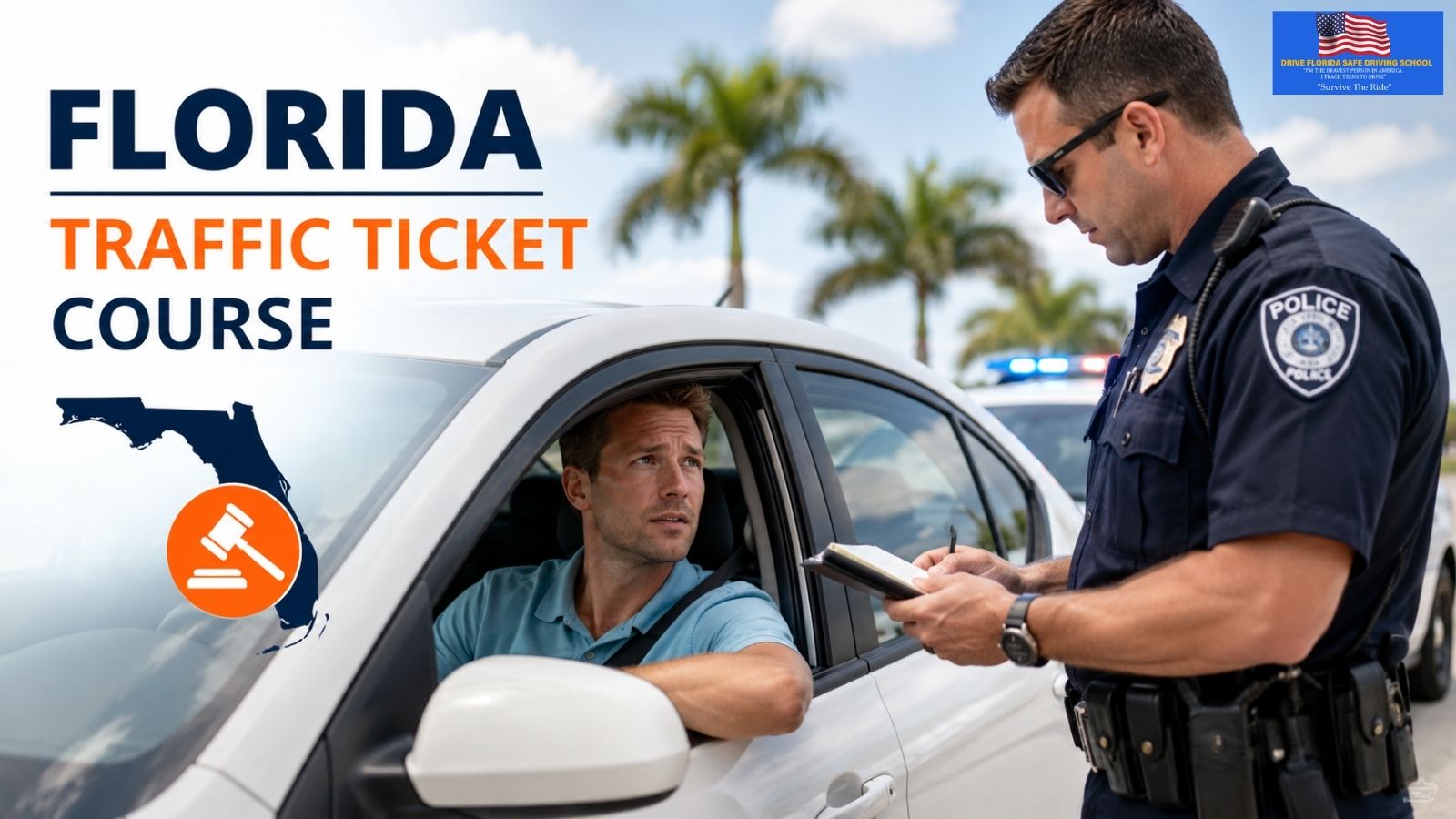
This is particularly important because someone searching for a Florida traffic ticket course may encounter programs that appear similar in search results but are intended for an entirely different purpose.
Imagine a 16-year-old who has never driven before. They need foundational knowledge about traffic signs, intersections, safe following distances, speed control, and defensive driving.
A traffic course designed for someone responding to a citation may not provide the same type of beginner-focused education.
Expert tip: Never enroll based solely on the words “Florida driving course.” Read the course’s intended purpose and eligibility information first.
Florida has specific rules governing driver licensing and education. Requirements can also depend on factors such as age and the applicant’s individual circumstances.
That means a course should clearly explain how its curriculum relates to Florida’s licensing process.
Before enrolling, verify:
Do not assume that completing an online course automatically means you have completed every step necessary to obtain a learner’s permit.
The course is one component of the broader process.
A student may finish an online class and believe they are ready to receive a permit, only to discover they still need identification documents, testing, parental requirements, or another step.
A trustworthy course provider should make these distinctions clear rather than creating unrealistic expectations.
A course can technically cover Florida driving rules while still being difficult to learn from.
Look for a curriculum that explains why rules exist and gives students realistic situations to think through.
Strong content should cover areas such as:
Students should learn to recognize regulatory, warning, guide, and other common road signs.
Intersections can be particularly challenging for beginners. Students should understand how right-of-way works in common situations rather than simply memorizing isolated rules.
New drivers need to learn how to anticipate mistakes made by other road users, maintain appropriate space, and recognize potential hazards.
Speed limits are important, but safe speed also depends on traffic, visibility, road conditions, weather, and surrounding hazards.
A strong course should address distractions involving phones, passengers, navigation systems, food, music, and other activities.
Students should understand the serious consequences associated with driving under the influence of alcohol or drugs and why impairment can affect decision-making and reaction time.
New drivers should know how to interact safely with pedestrians, cyclists, motorcycles, trucks, school buses, and emergency vehicles.
The best driving course Florida students choose is one that turns these subjects into practical knowledge rather than a collection of definitions.
Online learning is convenient, but convenience can become a weakness if the course simply asks students to watch hours of videos without actively engaging with the material.
When comparing an Online Florida Learner’s Permit Course, consider whether it includes:
Interactive learning helps reveal whether you actually understand the material.
For example, instead of merely reading that drivers should maintain a safe following distance, a scenario could ask:
You are following another vehicle in heavy rain. Visibility is reduced and the vehicle ahead suddenly slows. What should you do?
Questions like this encourage students to apply knowledge instead of recalling a sentence from a textbook.
When studying, don’t focus only on getting practice questions right. Pay attention to why an answer is correct.
If you can explain the reasoning behind an answer in your own words, you are much more likely to remember it when encountering a similar situation on the road.
An online course can provide valuable classroom-style education, but online learning does not replace actual driving practice.
This distinction is especially important for first-time drivers.
Learning online can help you understand:
But practical driving requires physical experience.
A student may know exactly what a stop sign means and still struggle with judging the distance of an approaching vehicle at an intersection.
Likewise, understanding lane positioning on paper is different from maintaining the correct position while driving in unfamiliar surroundings.
Think of the process as two connected stages:
Knowledge → Practice → Judgment → Experience
A strong online driving course can build the knowledge foundation. Supervised driving practice then helps turn that knowledge into practical skills.
Students often use the phrase Florida driving test to describe different parts of the licensing process. It is important to understand which test or requirement they are referring to.
A permit-focused educational course can help students develop the knowledge required for safe driving and prepare for relevant knowledge-based testing. However, students should not assume that completing a course guarantees a passing score.
The best preparation involves combining:
Don’t rely on memorizing answers from a single practice test. Questions can be presented differently, and real-world driving requires understanding rather than pattern recognition.
One advantage of online education is flexibility. Students may want to study from a computer, tablet, or phone.
Before enrolling, consider whether the platform is easy to use on your preferred device.
Check for:
This might seem like a technical detail, but it can have a direct effect on learning.
If a student struggles to navigate the platform, repeatedly loses progress, or cannot easily review previous lessons, the course becomes frustrating.
A good learning platform should keep the technology in the background so the student can focus on the material.
The final consideration is the organization behind the course.
Look beyond advertising claims. A trustworthy provider should make important information easy to find.
Look for:
Reviews can also provide useful insight, but don’t judge a course exclusively by star ratings.
Pay attention to what students actually mention.
For example:
Useful review:
“Lessons were easy to understand, and the explanations helped me understand why I got practice questions wrong.”
Less useful review:
“Great course!”
Detailed feedback tells you much more about the actual learning experience.
Choosing a good course is only half the process. Your study habits also matter.
If you want to learn driving online Florida students should approach online education as active study rather than something to finish as quickly as possible.
Instead of trying to complete everything in one sitting, divide the material into manageable sessions.
For example:
Spacing your study can improve retention and give you time to identify weak areas.
When you encounter something you don’t understand, write it down.
Don’t simply memorize the answer.
Ask:
What situation does this rule apply to?
That question turns passive study into practical learning.
Price matters, but the lowest price does not necessarily provide the best value.
A course with clearer explanations, better practice tools, and stronger support may save time and frustration.
Florida traffic laws can differ from those in other states.
A general national driving course may not provide the Florida-specific information you need.
Knowledge and practical skill are different.
Students still need appropriate supervised driving experience when they are legally permitted to practice.
Memorizing answers can create false confidence.
Understand the rule behind the answer instead.
Always verify whether the program is appropriate for your age and licensing situation before paying for enrollment.
A learner-focused course and a Florida traffic ticket course can have completely different purposes.
Read the course description carefully.
If you’re taking a Florida learners permit course, these practical habits can make your preparation more effective.
Completion is not the same as comprehension.
If a section introduces an unfamiliar traffic rule, stop and review it.
Road signs are easier to remember when you associate their appearance with their meaning.
Ask yourself what you would do if:
Scenario thinking builds better decision-making skills.
If you can explain a rule to a parent or friend without looking at your notes, you probably understand it.
Passing an exam is a milestone. Becoming a safe driver is the larger goal.
For many students, online learning offers an accessible way to study Florida driving rules at a convenient pace.
It can be particularly useful for students who:
However, online education works best when combined with responsible supervised driving practice and reliable information about Florida’s current licensing requirements.
The goal isn’t simply to finish a course.
The goal is to become a driver who understands what to do, when to do it, and why it matters.
Before choosing your Online Florida Learner’s Permit Course, ask yourself:
If you can answer these questions confidently, you’re in a much better position to choose a course based on quality and suitability rather than advertising alone.
Choosing the right Florida learners permit course is an important first step toward becoming a safe and informed driver. The best choice isn’t necessarily the course with the shortest completion time or the lowest price. Look for Florida-specific content, a well-structured curriculum, interactive learning, transparent completion information, reliable support, and a clear distinction between online education and practical driving experience.
An Online Florida Learner’s Permit Course can make studying more flexible and accessible, but its real value comes from helping students understand the decisions they will eventually make on the road.
For new drivers preparing for their next step, Drive Florida can be a useful starting point for exploring driver education options and building a stronger foundation before getting behind the wheel.
Look for a course that is appropriate for your age and licensing situation, uses Florida-specific traffic information, provides clear explanations, and offers meaningful opportunities to test your understanding. Interactive quizzes and scenario-based examples are particularly useful because they help students apply rules rather than memorize isolated facts.
Also check how course completion is handled and whether the provider clearly explains what you must do after finishing the course. A reliable course should never make you guess about the next step.
No. Online education and behind-the-wheel instruction serve different purposes.
An online course can teach traffic laws, road signs, defensive driving concepts, and safe-driving principles. Actual driving practice develops vehicle-control skills, observation, positioning, hazard recognition, and decision-making.
For a first-time driver, the strongest approach is to combine structured online education with appropriate supervised practice.
No. Although both involve driver education, their purposes can be different.
A learner-focused program is generally intended to help new drivers develop foundational knowledge. A traffic-ticket or traffic-school course may instead be designed for drivers dealing with a citation or another specific requirement.
Always read the provider’s course description carefully before enrolling. If you need education for a particular licensing or citation requirement, verify that the specific course addresses that requirement.
Start by reviewing the areas where you made mistakes during practice. Then use reliable Florida-specific study material and continue working through questions until you understand the reasoning behind the answers.
Don’t focus entirely on achieving a high practice-test score. Ask yourself whether you understand the underlying traffic rule.
If you’re also preparing for practical driving evaluation, spend time developing real-world skills with appropriate supervision. Knowledge of the rules and the ability to apply them safely are both important.
There isn’t one ideal study schedule for every student. The important factor is whether you understand the material, not how quickly you finish.
A student who completes lessons rapidly but forgets the information may be less prepared than someone who studies in shorter sessions and reviews difficult topics.
A practical approach is to study consistently, take notes on confusing subjects, use quizzes to identify weak areas, and revisit those topics before moving on. This creates stronger retention than simply trying to complete the course as quickly as possible.
At Drive Florida Safe Driving School, we are dedicated to assisting our novice learners to become the safest driver. We always strive to render that you or your loved one receives the most updated techniques, knowledge, and defensive driving norms.



 English
  Spanish
