Category Archives: Safe Driving

Driver arrested after Bradenton motorcyclist killed in Manatee County crash

WEST SAMOSET, Fla. — A man is dead and a woman was arrested following a crash involving a motorcycle in Manatee County, Florida Highway Patrol troopers said. 

The crash happened just after 4:30 p.m. Tuesday on U.S. 41 near the area of 33rd Avenue East in West Samoset. Troopers say the 56-year-old motorcyclist from Bradenton was going east within the driveway access of a nearby shopping center. In this area, 1st Street is another name for U.S. 41. 

At the same time, the 31-year-old driver from Bradenton was going south on the inside lane of U.S. 41 approaching the same driveway access. 

The motorcyclist turned right onto U.S. 41 in front of the 31-year-old’s car. This resulted in the front of the car hitting the rear of the motorcycle. 

Because of this, the 56-year-old man was ejected from his motorcycle and landed on the southbound inside lane of U.S. 41. The man died at the scene. 

Troopers say the 31-year-old woman was arrested for driving a car without a driver’s license and was booked into the Manatee County Jail. 

Credit: 10 Tampa Bay

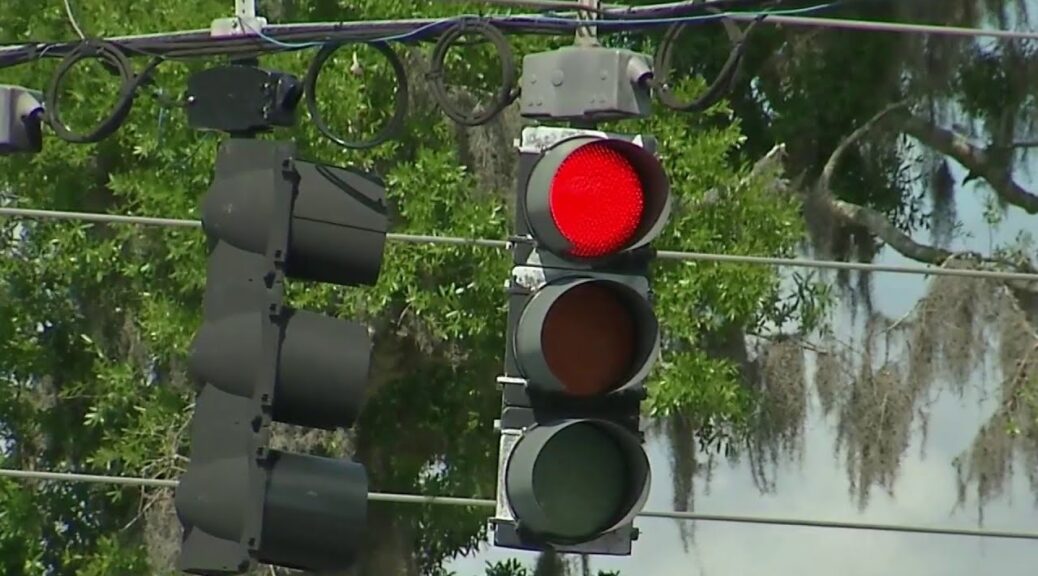
Can drivers pass a red light that doesn’t turn green? What Florida law says about that

We don’t have much patience on the road in Miami. Drivers want to be on the move despite gridlock, slow-poke tourists and people paying more attention to their cellphone than the light that just turned green.

But what happens if that red light doesn’t change to green? Is it broken? Did it skip a cycle? Or are you just impatient?

And is it legal in Florida to ignore a light that seems to be stuck on red, and pass through an intersection?

Here’s what to know:

What should you do if a traffic light doesn’t change?


There is no law in Florida allowing a driver to pass a solid red light that doesn’t change to green. That means you are risking a ticket if you run the red, even if the coast is clear. One thing to know: A light that doesn’t seem to change may just be taking longer than you’re used to, or have patience for — it doesn’t mean it’s broken.

Some states have what is called a “Dead Red Law,” which allows bicyclists and motorcyclists to run a red that isn’t triggered by their vehicle. Florida isn’t one of them, according to the Murphy Law Group in Sarasota.

If a red light isn’t changing to green, police and traffic advocates suggest pulling up to the intersection line, then rolling your vehicle back and forth to trip the light sensor in the pavement. If that doesn’t work, turn right on red when the coast is clear. Then report the faulty light to 511. A sensor may not recognize a bicycle, motorcycle or lighter vehicle, or just be faulty no matter the vehicle size. “I’m not going to tell you to just proceed through the intersection,” Trooper Steve Montiero told Orlando TV station WKMG. “What I will say if you can make a right and avoid this intersection and maybe make a U-turn later on down the road — that would be your best bet.”

If you do pass what you think is a stuck light and get caught, you can take it to court. “Unfortunately, ignorance of a law is not a good defense in most cases,” according to the Murphy Law Group. “However, your attorney may be able to help you defend against the citation, so you can avoid having it on your license. If a light is broken, or if the trigger system was not working, then it might have been reasonable to continue on safely. This is something to discuss with your attorney if you’re cited for running a red light that wasn’t working properly.”

What should you do if a traffic light is not working but flashing?

Florida law is clear on what drivers have to do if they approach an intersection with a flashing red or yellow light:

Red: According to Florida law, drivers who approach a flashing red light need to stop, check for traffic, then proceed through the intersection.

Yellow: Drivers who approach a flashing yellow light must proceed with caution, Florida law says.

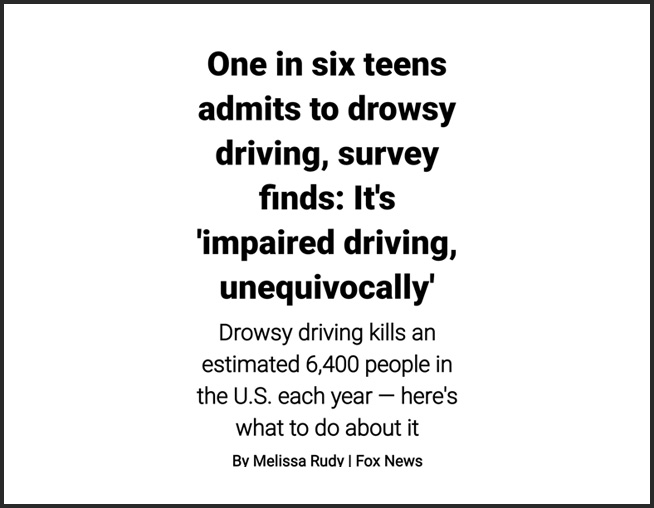
One in six teens admits to drowsy driving, survey finds: It’s ‘impaired driving, unequivocally’

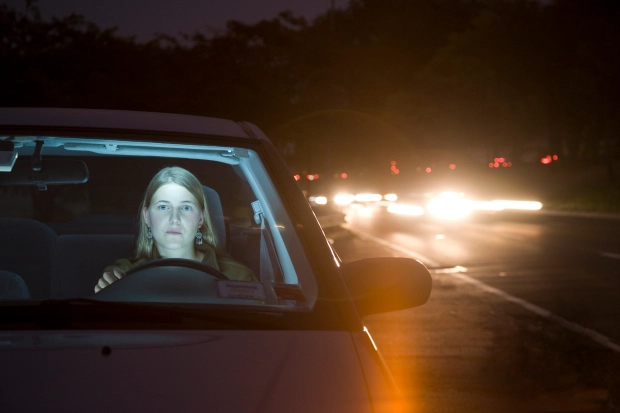
Many teens say they’ve driven while they feel drowsy — and they believe that it’s not as dangerous as driving while drunk or distracted.

That’s just one of the findings revealed in the 2023 Drowsy Driving Survey from the National Sleep Foundation (NSF) in Washington, D.C., which explored 1,124 American teens’ attitudes and behaviors about drowsy driving.

One in six teens reported having driven while drowsy during their first two years behind the wheel, the survey found.

A vast majority (95%) of teens acknowledged that drowsy driving is dangerous — but they don’t think it’s as dangerous as drunk driving, drugged driving or distracted driving.

“It is important to note that drowsy driving is impaired driving, unequivocally — just like drunk, drugged and distracted driving,” said Joseph Dzierzewski, PhD, vice president of research and scientific affairs for the NSF, in a statement to Fox News Digital. 

As far as the reasons for drowsy driving, a majority of teens cited schoolwork and jobs as the biggest reasons for their sleep deprivation.

“Drowsy driving is impaired driving, unequivocally — just like drunk, drugged and distracted driving.”

Teens who have jobs said they were twice as likely to have driven while fatigued, to the point that they “had a hard time keeping their eyes open.”

Study limitations

The survey did have one chief limitation, Dzierzewski noted — which is the potential underreporting of drowsy driving. 

“However, this would mean that the actual rates of drowsy driving are even higher than what we found, suggesting the problem may be more widespread than currently believed,” he added.

“Something we found surprising is that even though motor vehicle crashes are the second leading cause of death among teenagers, most teens rated drunk, drugged and distracted driving as more dangerous,” Dzierzewski noted.

“Clearly, there is an opportunity for more education.”

ONLINE DANGERS ARE RAMPANT FOR KIDS TODAY — WHY PARENTS MUST KEEP THEM CYBER SAFE

Drowsy driving is entirely preventable, Dzierzewski said, emphasizing the need to teach young drivers about the importance of getting the necessary amount of sleep before operating a vehicle.

In a corresponding survey of 1,349 adults, the NSF found that the adults were even more likely to drive while drowsy — with six in 10 reporting having done so.

Tips for safe driving

Drowsy driving prevention is “everyone’s responsibility,” Dzierzewski emphasized.

“Always be on the lookout for drowsy driving warning signs when behind the wheel,” he advised. 

Some of those signs include having a hard time focusing on the road, yawning, blinking frequently, having trouble remembering the last few miles driven, having difficulty maintaining lanes, tailgating — or getting irritated with common traffic occurrences.

If any of those situations occur, it’s important to pull over to a safe place, said Dzierzewski, and get some rest, stretch or drink a caffeinated beverage.

“Only return to the road when you are sure it is safe to drive,” he said.

LACK OF SLEEP IS COMPROMISING THE MENTAL HEALTH OF 78% OF ADULTS, SURVEY FINDS

It’s also essential to get the recommended amount of sleep the night before your trip, said Dzierzewski. 

NSF recommends seven to nine hours of sleep per night for adults and eight to 10 hours for teens.

“While [drinking] caffeine, rolling down the windows and playing loud music might help you get safely to your destination, they are not a substitute for sleep.”

“Plan long trips with a companion who can not only look for early warning signs of fatigue, but also help drive when needed,” Dzierzewski suggested. 

“A good driving companion is someone who stays awake to talk to you and will be aware of your alertness.”

When on a long trip, he advises scheduling regular stops every 100 miles or two hours.

“Remember, while [drinking] caffeine, rolling down the windows and playing loud music might help you get safely to your destination, they are not a substitute for sleep.”

Roughly 20% of all motor vehicle crashes are related to drowsy driving, according to the AAA Foundation for Traffic Safety.

Among drowsy driving-related crashes, 20% of them involved teens and young adults aged 16 to 24.

MIRROR, MIRROR Drivers are just realizing the lifesaving ‘split mirror trick’ which shows you when to safely change lanes

THERE are numerous ways you can use your car’s review mirror to easily enhance your driving experience.

YouTube channel recently shared a huge tip that drivers can try with the rearview mirrors on their car to ensure clear and safe lane switches.

The YouTube channel known as @dashishuoche regularly shares car knowledge with its subscribers of nearly 850,000.

In a video, the person who runs the page suggested adjusting both mirrors to where the lower corner of them are lined up with the handles on the front doors to successfully use the simple mirror trick.

Once you have both your car mirrors properly adjusted, the YouTuber said you’ll have the best view of roadside curbs and cars coming up behind you.

One of the tips shared in the video involves splitting your rearview mirror into two even left and right sections mentally.

“It is safer to change lanes and make U-turns when the vehicle behind is on the right half,” the video informed.

“When it appears on the left half, it means that the car behind is very close to you.”

The clip went on to warn drivers, that if the car behind you is on the left side of the rearview mirror: “Don’t change lanes.”

The helpful YouTube video has been viewed nearly 5million times.

In the comments, a viewer said: “No matter what all you need is experience.”

Someone else chimed in saying: “Nice tricks.”

They added: “I would be carefull though, to take into consideration the measurements of your own car in order to use them.”

“Now I have to remember to get a marker to split my mirror into half,” a YouTuber said jokingly.

NIGHT LIGHT Drivers are just realizing what mystery button inside cars is really for – and it makes driving at night so much easier

EL propósito de un botón poco conocido que se encuentra en muchos autos ha sido revelado en un hilo de Reddit.

A little power button or switch is a common feature on the bottom bracket of many rearview mirrors.

But lots of drivers have no idea what the button does, KFYR reported.

“The only thing that happens when I click the power button is the green light turns off,” one Reddit user said in a thread on the What Is This forum that’s currently unavailable.

But another user revealed that this button actually activates a car’s auto-dimming feature.

The change would only be perceptible at night, so it makes sense that some drivers wouldn’t see anything happen when pressing the button.

Reddit isn’t the only social media platform where people have been talking about the feature.

“You ever be driving home from a long day, then there is a chap right behind you who doesn’t know anything about social distancing & is all up in your personal space with their lights full beam?” one Twitter user asked.

“Well, your rearview mirror has that toggle that enables anti glare mode,” they said.

“This changes how the light reflects off the mirror so as not to blind you. You don’t have to adjust the whole mirror, just toggle that little thingamajig & you good.”

More details were provided on one Mazda dealer’s website.

“When auto-dimming is turned on, your rear-view mirror will automatically darken in order to reduce headlight glare,” the dealership said.

“There is a rear light sensor that can detect when a vehicle behind you is shining its headlights toward your mirrors. Anytime the vehicle is started, the auto-dimming feature will be activated.”

Still, not every car has this feature, and it should be noted that some vehicles have one button to turn it on and another that disables it.

But Reddit users were still happy to have an answer.

“Another great life mystery solved,” one said.

Inculque hábitos de conducción segura en su hijo adolescente

Los conductores adolescentes están especialmente en peligro en la carretera porque carecen de experiencia y sabiduría tanto en la vida como en la conducción. Los adolescentes se distraen fácilmente cuando manejan un vehículo, especialmente con otros pasajeros de su misma edad. Cuando sus compañeros están en el automóvil con ellos, los conductores adolescentes tienden más a acelerar, correr riesgos y hacer otras cosas que normalmente no harían.

Exceso de velocidad

Es más probable que choque y pierda el control de su vehículo si viaja demasiado rápido. Acorta el tiempo de respuesta a los eventos que suceden a su alrededor mientras alarga la distancia de frenado de su automóvil. Además, el exceso de velocidad reduce la eficacia de las funciones de seguridad de su automóvil, como las bolsas de aire y los cinturones de seguridad. Recuerde que tiene menos espacio para detener su automóvil, menos tiempo para reaccionar ante los riesgos, equipos de seguridad menos efectivos y una mayor probabilidad de colisión cuando acelera en el futuro.

Use un cinturón de seguridad

El uso del cinturón de seguridad es una de las formas más sencillas de reducir el peligro al conducir. En 2020, los accidentes que involucraron a conductores adolescentes resultaron en un número máximo de muertes. La mayoría de los conductores jóvenes que fallecieron en automóviles de pasajeros en 2020 no usaban cinturones de seguridad. Incluso durante una colisión, su cinturón de seguridad evitará que salga despedido del vehículo o golpee sus partes internas.

Conducción temeraria

Conducir en estado de ebriedad incluye estar distraído, con sueño o enfermo, así como conducir en estado de ebriedad o en posesión de otra sustancia. Su adolescente ya conoce las leyes que prohíben el uso de alcohol, drogas y otras sustancias mientras conduce un vehículo. Sin embargo, tómese el tiempo para hablar con su hijo adolescente sobre qué hacer en caso de que deba elegir entre conducir en estado de ebriedad o viajar con un conductor ebrio.

Distracted Driving

La conducción distraída es, con mucho, el problema más importante al que nos enfrentamos. Aprecie a su adolescente por mantener la atención mientras conduce y evita colisiones. Puede mostrarle a su adolescente que aprecia sus esfuerzos para conducir de manera segura al hacer esto.

¿Estás conduciendo bajo la lluvia? Ser cauteloso

En particular, para los conductores novatos o sin experiencia, conducir bajo la lluvia puede ser complicado y, a veces, mortal. A medida que se acerca la primavera, es fundamental que los conductores adolescentes sean conscientes de los peligros de conducir con mal tiempo y que tomen las medidas de seguridad adecuadas para permanecer en la carretera.

Tracción e hidroplaneo en vehículos

Cuando conduce bajo la lluvia, una de las cosas más importantes que debe recordar es que las carreteras pueden volverse bastante resbaladizas, lo que reducirá la tracción de su automóvil y hará que sea mucho más difícil manejarlo. Disminuya la velocidad y mantenga una distancia de seguimiento segura para evitar hidroplanear o perder el control. Además, debe evitar movimientos inesperados y paradas bruscas que puedan hacerle perder el control del automóvil.

Diminished Visibility

Mantener la vista es crucial cuando se conduce bajo la lluvia. Es crucial verificar que los limpiaparabrisas funcionen correctamente y que las luces delanteras estén encendidas porque conducir bajo una lluvia intensa puede dificultar la visión del camino. En general, los limpiaparabrisas deben reemplazarse cada seis meses a un año. Mantener una mayor distancia con otros autos también le dará más tiempo para reducir la velocidad y evitar el rociado de otros vehículos en la carretera.

Uso adecuado de los faros bajo la lluvia

Los conductores deben encender sus faros para mejorar la conciencia y permitir que otros los vean. Independientemente de la hora del día o del clima, muchos estados exigen el uso de faros siempre que se usen los limpiaparabrisas. Es importante verificar la intensidad de las luces delanteras porque las luces altas pueden deslumbrar y reflejarse en la lluvia, lo que dificulta ver. Si el deslumbramiento se convierte en un problema, los conductores deben cambiar las luces altas a las luces antiniebla para aumentar la visibilidad. Mantener la funcionalidad de sus faros garantizará que estén listos para funcionar cuando los necesite.

Recibir la instrucción y capacitación correctas de la Escuela de Conducción Segura de Drive Florida para conducir bajo la lluvia puede tener un impacto significativo en el comportamiento tanto de usted como de su automóvil.

Prepare a su adolescente para conducir

Asegúrese de que su futuro conductor esté listo para la curva de aprendizaje antes de buscar una escuela de manejo de buena reputación para él. Cuando no estás en el coche con ellos, tu objetivo es que conduzcan con seguridad. Los programas de Drive Florida Safe Driving School pueden ayudar a su adolescente a prepararse para su licencia y experiencia de manejo.

Las lecciones que aprende su adolescente

Drive Florida Safe Driving School quiere apoyar la educación de los conductores jóvenes para que puedan operar vehículos de manera segura. Con años de experiencia instruyendo a niños de esta edad, nuestro personal está capacitado para mantener su atención y garantizar que retengan el material.

Nuestros programas efectivos de escuelas de manejo ponen un fuerte énfasis en la seguridad, lo que incluye ser conscientes de los riesgos asociados con la conducción distraída. Obtendrán conocimiento de las técnicas de conducción y las normas de tráfico locales. Los cimientos que construya su adolescente lo mantendrán seguro en las carreteras por el resto de sus vidas.

Los principales consejos que se deben seguir al conducir por primera vez:

Configura cómodamente el vehículo

Antes de comenzar a conducir, asegúrese de que su asiento, espejos y volante estén ajustados. Su cuerpo debe poder caber cómodamente en el asiento, que debe estar alejado del volante. Puede relajarse y concentrarse mejor en la experiencia de conducción si se siente cómodo.

Debe tener una visión clara de su entorno en sus espejos. Hay ciertos volantes sin ajustabilidad. Encuentre un volante que se ajuste a su altura y estatura en esta situación.

Elige tu carril con cuidado

Conozca la función de cada carril antes de ponerse al volante por primera vez. Puede evitar atascos de tráfico haciendo esto. Solo rebase a otros autos a un ritmo seguro en el carril más a la izquierda, luego tome la salida de la izquierda. Si te mueves a una velocidad constante durante una gran distancia, el carril central es el mejor. Antes de girar o cambiar de carril, tómese un espacio adicional.

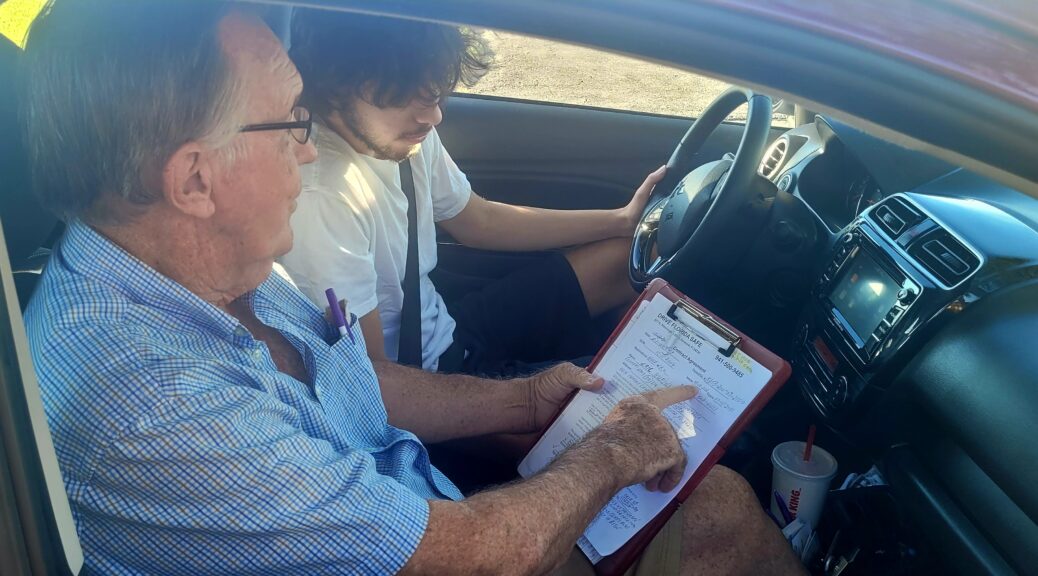
En Drive Florida Safe Driving School ofrecemos instrucción de manejo detallada. Aprendes a conducir de forma segura y responsable con la ayuda de nuestros profesores.